Data
Collection
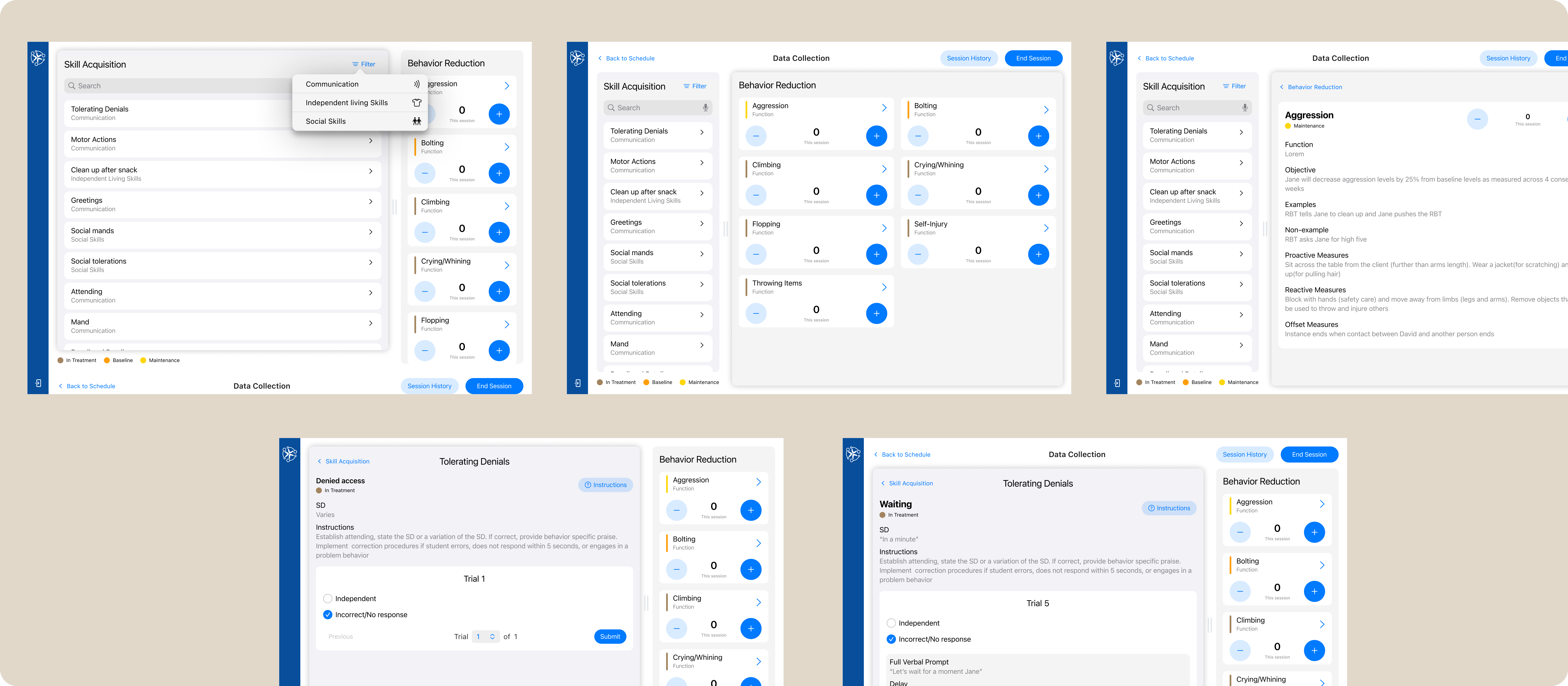
A native iOS app designed for Registered Behavior Technicians (RBTs) to capture therapy session data in real time. Before this app, RBTs recorded everything on printed sheets and paper forms — with no way to feed that data directly into Curative AI.
I led the full design process: from interviewing 12 RBTs to understand their in-session workflow, through low-fidelity wireframes, high-fidelity UI, usability testing, and iteration.
Hands full, attention split, recording on paper
RBTs conduct intensive one-on-one therapy sessions with patients — often children. Their hands and attention are fully occupied during a session, yet they were expected to track goals, behaviors, timing, and notes simultaneously on paper. Data was then manually transcribed into separate systems after the fact, creating delays, transcription errors, and lost information. There was no digital tool designed around the actual rhythm of a therapy session.
12 RBT interviews to understand the session minute by minute
I interviewed 12 RBTs to understand how a therapy session actually flows — minute by minute. I needed to know when they had both hands free, when they needed to record something instantly, and what would feel disruptive vs. natural during a session. These interviews shaped every interaction model in the app: one-tap logging, session-aware timers, and a flow that moves with the therapist instead of interrupting them.
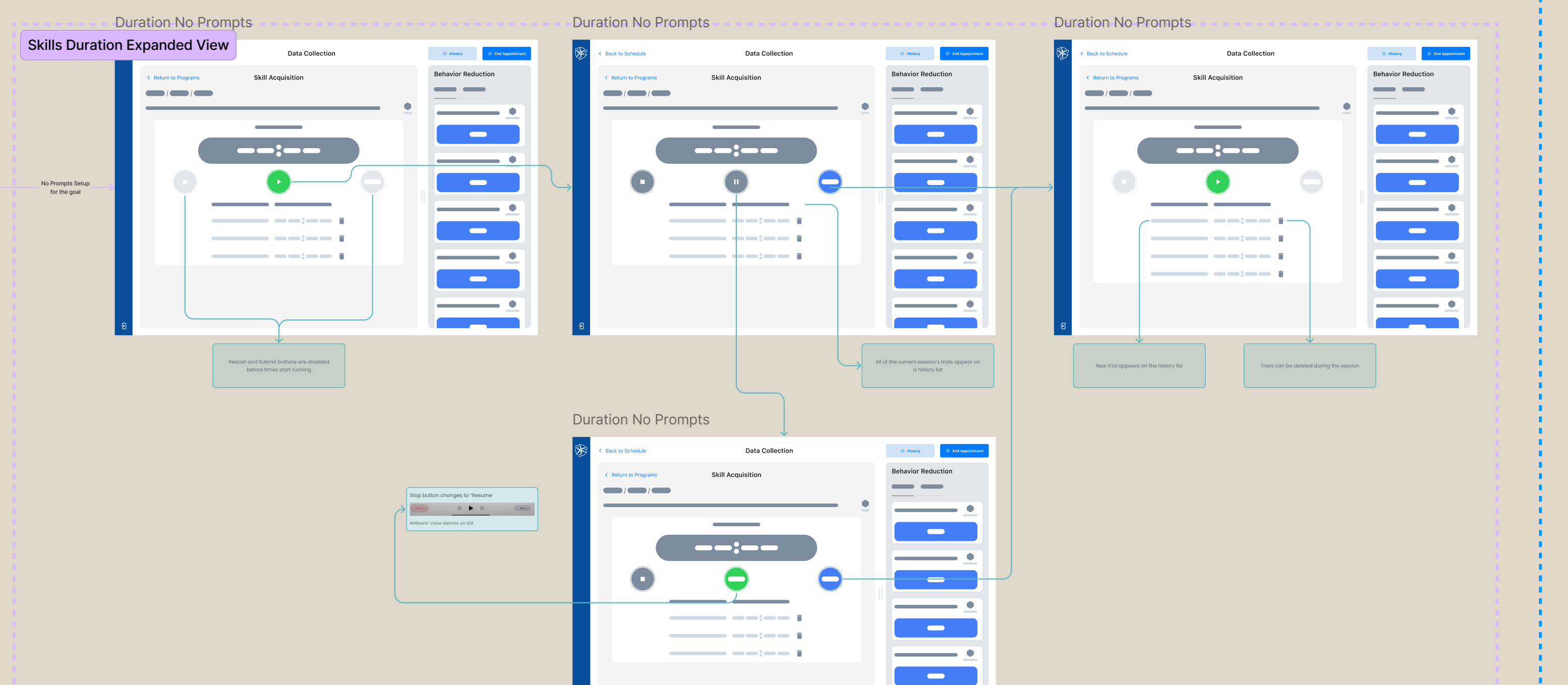
From research insights I built low-fidelity wireframes focused on speed and minimal cognitive load, then moved to high-fidelity mockups using Crayon DS components adapted for mobile. The designs went into usability testing with RBTs, and I iterated based on their feedback before final handoff.
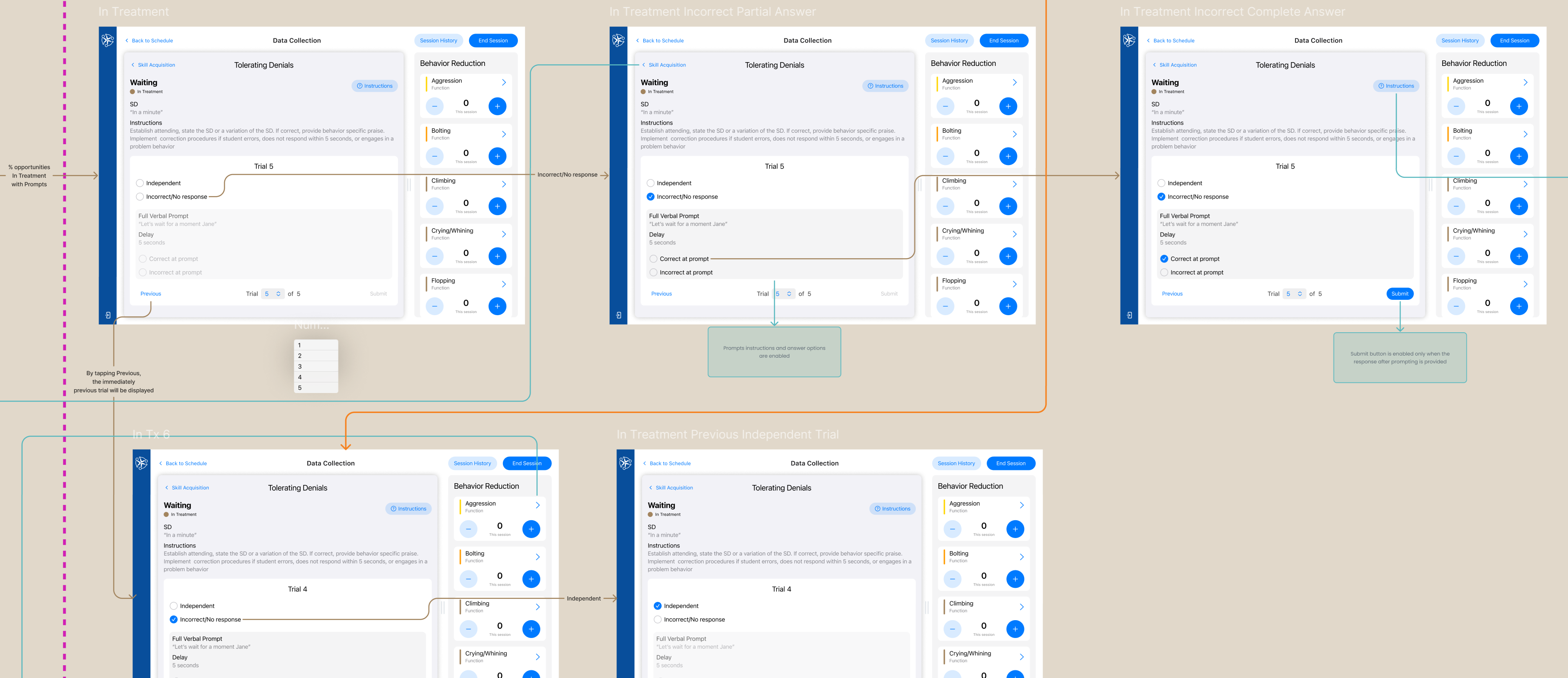
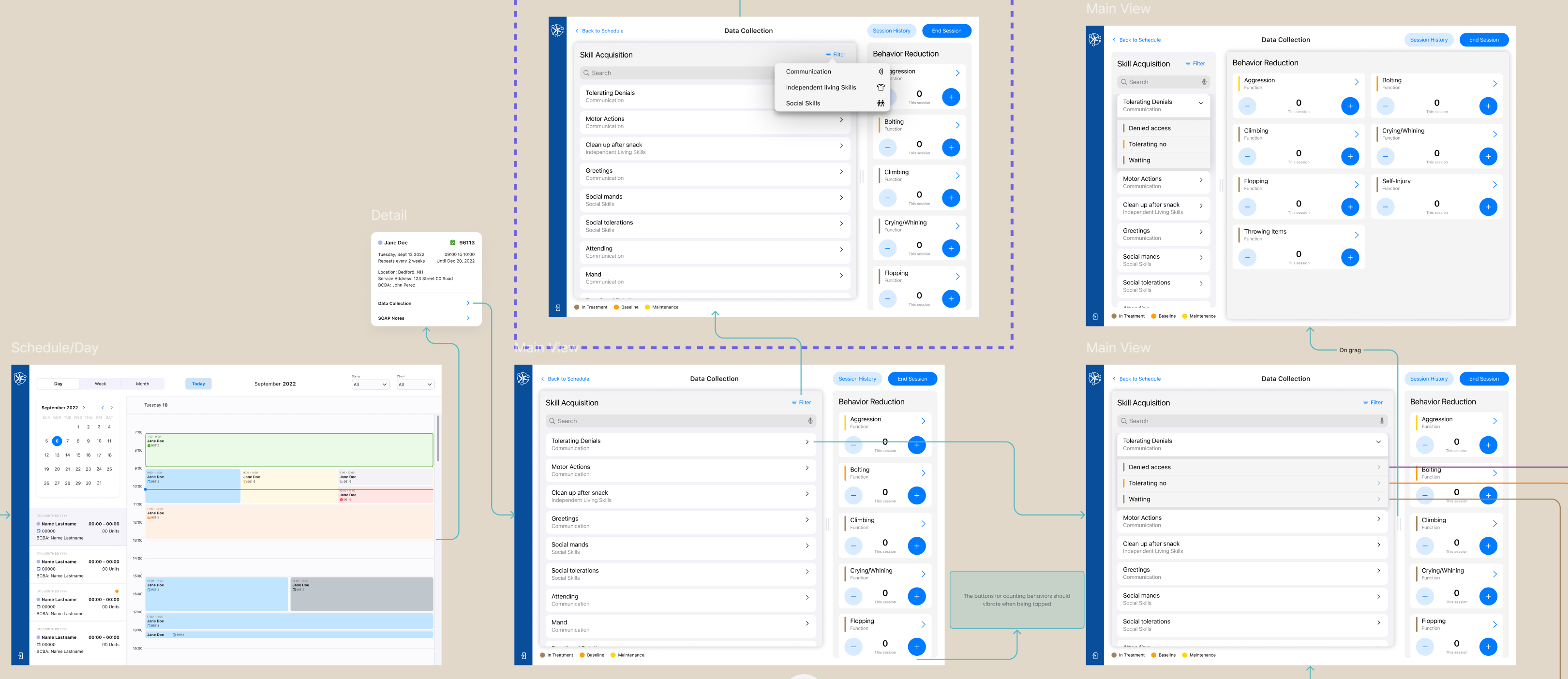
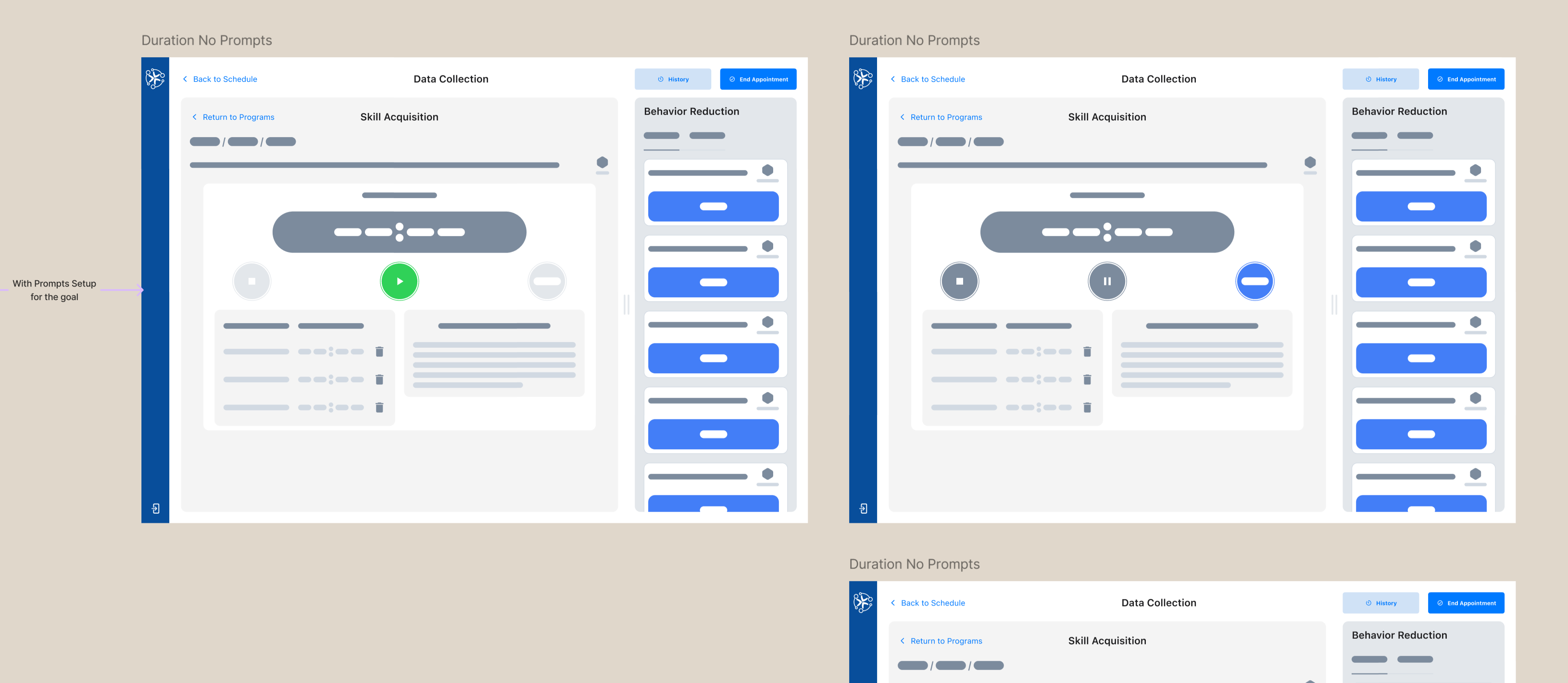
An app structured around the arc of a therapy session
A native iOS app structured around the arc of a therapy session — from setup to sign-off. RBTs arrive at a session, pull up the patient's goals and program, and log data with minimal taps throughout.